
In the HVAC (Heating, Ventilation, and Air Conditioning) industry, the term FCU is widely used to refer to Fan Coil Unit. FCUs play a critical role in temperature control and air circulation within residential, commercial, and industrial buildings. Understanding the meaning, function, and benefits of FCUs in HVAC systems is essential for engineers, contractors, and building owners alike.
This article explores what FCUs are, their types, components, advantages, and applications, providing a complete understanding of their role in HVAC systems. By the end, you’ll have a clearer picture of how FCUs contribute to creating comfortable and energy-efficient environments.
What Is an FCU in HVAC?
An FCU, or Fan Coil Unit, is a simple device that uses a fan and a coil to either heat or cool a space. It is typically connected to a central water system, where chilled or hot water flows through the coil, allowing air blown over it to be conditioned and circulated into the room.
Key Features of FCUs:
• Compact design: Suitable for various room sizes.
• Versatility: Can provide both heating and cooling.
• Cost-effectiveness: Ideal for localized temperature control.
Types of Fan Coil Units
Fan coil units come in several configurations, each suited to specific building requirements and HVAC designs.
1. Two-Pipe FCU
A two-pipe system has one supply pipe and one return pipe, used for either heating or cooling at a given time.
Advantages:
• Simpler and less expensive to install.
• Suitable for climates with distinct seasonal heating and cooling periods.
Disadvantages:
• Limited to either heating or cooling, not both simultaneously.
2. Four-Pipe FCU
A four-pipe system includes separate supply and return pipes for both heating and cooling, allowing simultaneous operation.
Advantages:
• Greater flexibility in maintaining different temperature zones.
• Ideal for buildings with diverse HVAC requirements.
Disadvantages:
• Higher installation and maintenance costs.
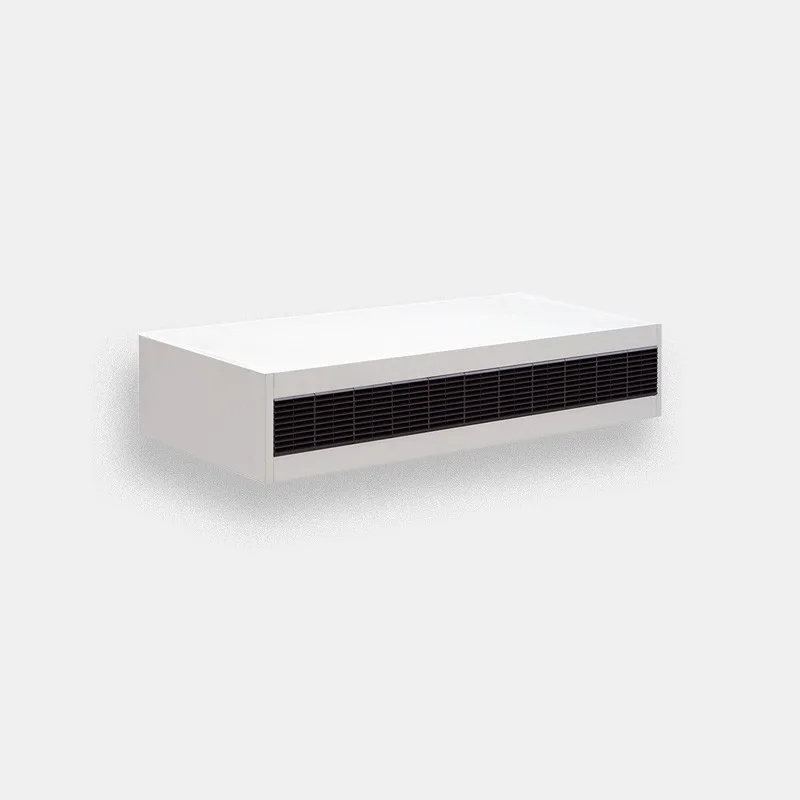
3. Ceiling-Mounted FCU
Ceiling-mounted units save floor space and are commonly used in offices and commercial spaces.
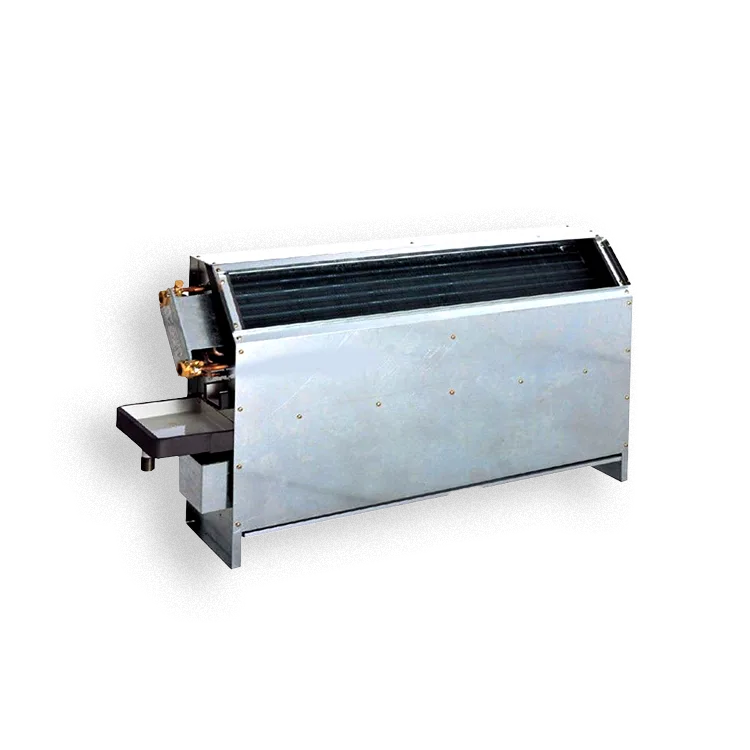
4. Floor-Mounted FCU
These units are installed along walls or under windows, suitable for rooms with limited ceiling space.
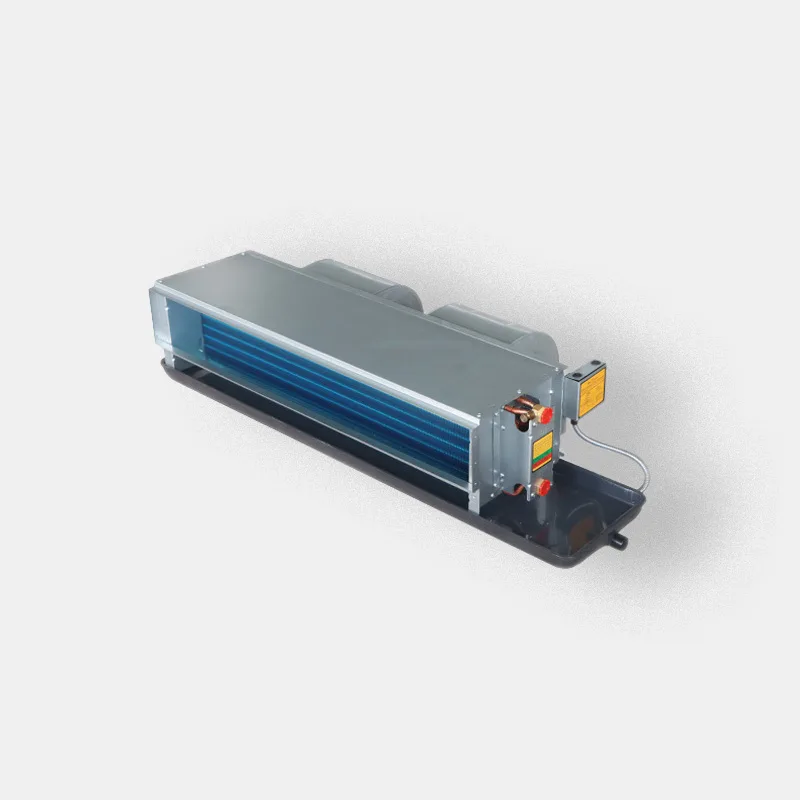
5. Ducted FCU
Ducted FCUs allow air distribution through ducts, providing uniform air conditioning across large spaces.
Components of an FCU
Understanding the core components of an FCU can help in maintenance and troubleshooting.
1. Fan
The fan circulates air across the coil and into the room. Modern FCUs often use variable-speed fans for energy efficiency.

2. Coil
The coil is a heat exchanger through which hot or cold water flows. Air passing over the coil is conditioned.

3. Filter
The air filter traps dust and particulates, ensuring clean air is delivered to the space.
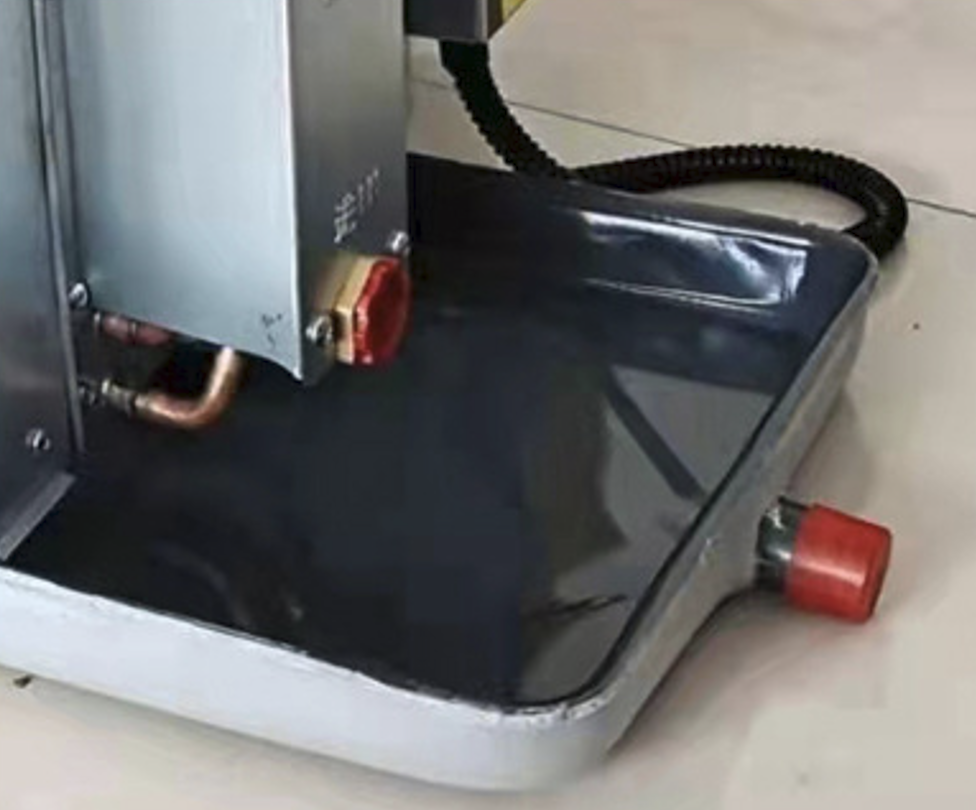
4. Drain Pan
The drain pan collects condensation formed during the cooling process and directs it to the drainage system.
5. Thermostat
A thermostat allows users to control the temperature by adjusting fan speed or water flow.
Benefits of Using FCUs in HVAC Systems
FCUs are an essential component of modern HVAC systems, offering numerous advantages.
1. Energy Efficiency
FCUs allow localized temperature control, reducing energy waste by conditioning only occupied spaces.
2. Cost Savings
The simplicity of FCUs lowers installation and maintenance costs compared to central HVAC systems.
3. Flexibility
With various configurations, FCUs can adapt to diverse building layouts and HVAC requirements.
4. Enhanced Comfort
FCUs provide precise temperature control, ensuring optimal comfort for occupants.
5. Scalability
FCUs are easy to install in modular systems, making them ideal for buildings of varying sizes.
Applications of Fan Coil Units
Fan coil units are used across a range of environments, from residential apartments to large commercial complexes.
1. Residential Buildings
FCUs offer an efficient solution for single-room heating and cooling in homes.
2. Hotels
Their flexibility allows individual room temperature control, enhancing guest satisfaction.
3. Offices and Commercial Spaces
Ducted FCUs ensure uniform air conditioning in open-plan offices or large meeting rooms.
4. Hospitals
Quiet and efficient FCUs maintain comfortable conditions in patient rooms and operation theaters.
5. Industrial Facilities
In industries, FCUs contribute to maintaining optimal temperatures for equipment and staff.
Maintenance Tips for FCUs
Regular maintenance is crucial for the efficient operation and longevity of fan coil units.
1. Clean Air Filters
Dirty filters can restrict airflow, reducing efficiency. Clean or replace filters regularly.
2. Inspect and Clean Coils
Dust and debris on the coil can impair heat exchange. Ensure coils are cleaned periodically.
3. Check Thermostat Settings
Ensure the thermostat is functioning correctly to maintain desired temperatures.
4. Drain Pan Maintenance
Check the drain pan for clogs or leaks to prevent water damage.
5. Schedule Professional Inspections
Periodic inspections by HVAC professionals help detect and resolve issues early.
Conclusion
FCU, meaning Fan Coil Unit, is a vital component in HVAC systems, offering flexible, energy-efficient, and cost-effective temperature control solutions. With their versatility, they are widely used in residential, commercial, and industrial settings, contributing to comfortable and sustainable environments.
By understanding the types, components, and benefits of FCUs, you can make informed decisions about their use and maintenance in your HVAC systems.
For more insights into HVAC technology and solutions, stay connected with us at ConstArt—your trusted partner in building comfort.
Specific Products in ConstArt: https://constart.net/product/horizontal-concealed-fan-coil-unit-for-chilled-water-hvac-system/
More about HVAC/R Product Visit : https://constart.net


