
Modern HVAC-R systems are evolving at a breakneck pace. You are contending with higher operating pressures from new, environmentally-friendly refrigerants, while clients demand unprecedented levels of energy efficiency and long-term reliability. In this complex equation, one variable remains fundamental to success: the selection of the right HVAC COPPER TUBE. An incorrect choice compromises not just performance, but the entire integrity and lifespan of the installation.
We have seen firsthand how a seemingly minor component can become a project’s single point of failure. This guide cuts through the noise. It is engineered from over 15 years of our experience to provide you, the professional engineer and project manager, with a definitive framework for making the correct copper tube selection, every single time.
Why Copper Remains the Gold Standard for Refrigeration Systems
While alternative materials occasionally enter the discussion, copper’s position as the premier choice for refrigerant piping is secured by fundamental material science. Its advantages are not just marginal; they are critical to system performance.

Unmatched Thermal Conductivity: Copper’s thermal conductivity is a non-negotiable for system efficiency. It facilitates the rapid and effective transfer of heat, a process central to the refrigeration cycle. This superior performance, often measured at around 401 W/mK, directly translates to lower energy consumption and reduced operational costs over the system’s lifetime.
Superior Durability & Formability: HVAC systems must endure years of thermal cycling and vibration. Copper possesses excellent tensile and fatigue strength, ensuring it withstands these stresses without failure. Simultaneously, its ductility allows for precise bending and forming on-site, simplifying complex installations and reducing the number of mechanical joints, which are potential leak points.
Excellent Corrosion Resistance: Copper naturally forms a protective oxide layer that makes it highly resistant to the internal corrosion caused by various refrigerants and lubricating oils. This inherent stability ensures the tube’s interior remains clean and unobstructed, preserving system efficiency and preventing compressor damage from particulates.
Proven Reliability: For decades, copper has been the backbone of the HVAC-R industry. Its performance is not theoretical; it is documented across millions of installations worldwide, from residential split systems to large-scale commercial chillers. This proven track record provides an unparalleled level of assurance.
Navigating Global Standards: ASTM vs. EN for Refrigerant HVAC Copper Tube
Specifying a copper tube is not just about dimensions; it is about compliance. For projects in North America and Europe, you will primarily encounter two governing standards: ASTM and EN. Understanding their key distinctions is critical for ensuring compliance and system safety.
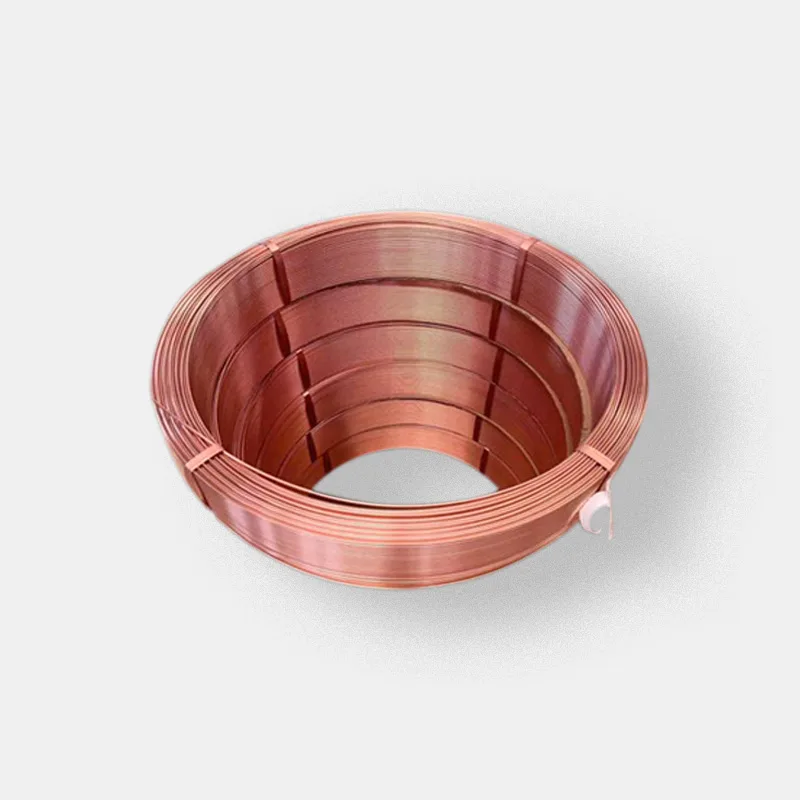
For America: ASTM B280 is the benchmark. This standard for “Seamless Copper Tube for Air Conditioning and Refrigeration Field Service” places a strong emphasis on cleanliness. It mandates that tubes be capped or plugged at the factory to maintain an interior surface that is essentially free of residues, which could otherwise contaminate the refrigerant and oil.
For Europe: EN 12735-1 is the prevailing standard for “Copper and copper alloys – Seamless, round tubes for air conditioning and refrigeration”. While it also has stringent cleanliness requirements, it differs from ASTM B280 in areas like dimensional tolerances and designated tempers (material hardness). For instance, wall thickness tolerances may be defined differently, impacting calculations for burst pressure.
We manufacture tubes that meet and exceed both standards. The critical takeaway for you is to specify the correct standard based on the project’s final destination. Failure to do so can result in non-compliance, inspection failures, and significant project delays.
The Critical Role of Branch Pipes in VRF/VRV System Efficiency
In Variable Refrigerant Flow (VRF/VRV) systems, the network of copper tubing is the circulatory system, and the branch pipes (often called refnet joints) are the heart valves. These are not simple T-fittings. A branch pipe is a precisely engineered component designed to divide the main refrigerant flow into multiple indoor units evenly and with minimal pressure drop.

Think of it as a critical traffic hub. A poorly designed or manufactured branch pipe will cause an imbalance in refrigerant distribution. This leads directly to some indoor units being starved while others are overfed, resulting in poor temperature control, increased system noise (from turbulent flow), and forcing the compressor to work harder, ultimately shortening its operational life. The precision of the welds, the smoothness of the internal pathways, and the exactness of the geometry in our branch pipes are essential for ensuring the entire VRF/VRV system operates at its peak designed efficiency.
Common Installation Pitfalls and How to Avoid Them
Even the highest quality HVAC COPPER TUBE can fail if installed incorrectly. Here are three common pitfalls we see in the field and our expert advice on how to prevent them.

- Improper Brazing Techniques: Overheating the tube during brazing can cause excessive oxidation on the inner surface, creating flakes (scale) that will travel through the system and clog the expansion valve or damage the compressor.
How to Avoid: Always purge the tube with an inert gas, such as dry nitrogen, during the brazing process. This displaces oxygen and prevents internal oxidation, ensuring a clean, strong joint.
- Contamination During Installation: Leaving tubes open to the atmosphere on a job site allows moisture and debris to enter. Moisture is the enemy of a refrigeration system, reacting with refrigerants and oil to form corrosive acids.
How to Avoid: Keep tubes capped until the moment of installation. When cutting a tube, use a dedicated tube cutter, not a hacksaw, to prevent metal filings from entering the system. Always deburr the cut end properly.
- Incorrect Sizing or Bending: Using undersized piping restricts refrigerant flow, reducing system capacity and efficiency. Conversely, oversized piping can lead to poor oil return to the compressor. Sharp kinks from improper bending create severe restrictions.
How to Avoid: Strictly adhere to the system manufacturer’s specifications for pipe diameters. Use a proper tube bender with the correct radius die to create smooth, sweeping bends that do not restrict flow.
Answering Your Key Questions
Will the HVAC R410A copper pipe work with any refrigeration as well?
This is a critical question, and the answer requires precision. A copper pipe specified for R410A is designed to handle its higher operating pressures. Therefore, it is generally safe and over-specified for use with older, lower-pressure refrigerants like R22.
However, the reverse is absolutely not true. You must never use a pipe rated for a lower-pressure refrigerant in an R410A system.
Furthermore, the landscape is shifting towards new-generation refrigerants like R32 (A2L, mildly flammable) and CO2 (R744, extremely high pressure). These refrigerants impose even more stringent requirements on the piping system. R32 demands meticulous installation practices due to its flammability classification, while CO2 systems require specialized, high-strength copper alloys (like K65) to handle pressures that can be 5-10 times higher than R410A.
Your safest course of action is always to consult with a technical expert. The refrigerant type dictates the required pressure rating, and sometimes the alloy, of the copper tube.
Our Commitment to Quality: Why Engineers Trust ConstArt HVAC-R
As one of the leading hvac copper tube suppliers globally, we understand that theoretical knowledge must be backed by flawless execution. At ConstArt HVAC-R, our commitment to quality is absolute. This is why engineers responsible for mission-critical projects specify our products by name.
Rigorous Quality Control: Every meter of tube we produce undergoes a battery of tests. We employ advanced non-destructive techniques like eddy current testing to detect microscopic surface imperfections and use spectral analysis to verify the precise purity and composition of our copper alloy.
Certified Excellence: Our manufacturing facilities and processes are certified to the highest international standards, including ISO 9001 for quality management and CE for compliance with European market regulations. These certifications are your guarantee of consistency and reliability.
Advanced Manufacturing: We invest heavily in state-of-the-art production lines that maintain the tightest dimensional tolerances in the industry. Our proprietary cleaning and capping processes ensure our tubes arrive at your job site in pristine, installation-ready condition.
Engineering Support: We are more than a manufacturer; we are your technical partner. Our team of experienced engineers is available to provide you with detailed calculations, material compatibility data, and project-specific selection advice
Partner with Us for Your Next HVAC-R Project
Selecting a high-quality HVAC COPPER TUBE is not an expense; it is an investment in the long-term performance, efficiency, and reliability of your project. The integrity of your system rests on the quality of the materials you choose.
Ready to ensure the reliability and efficiency of your next project? Contact our engineering team today for a technical consultation, or request a detailed quote for your specific requirements. Let’s build excellence together.


